Nameplates do more than tell people who sits where. They help visitors find the right person, make new team members feel welcome and give an office a polished, consistent look. From a brass deskplate on an executive's desk to wall nameplates outside a row of offices, the details say a lot about how a business presents itself.
In this guide, we compare nameplates, deskplates and office plaques, explain material and finish options, and share tips for wording, sizing and ordering for a whole team.
Nameplates, Deskplates and Office Plaques: What Is the Difference?
These terms are often used interchangeably, but each one has a slightly different job:
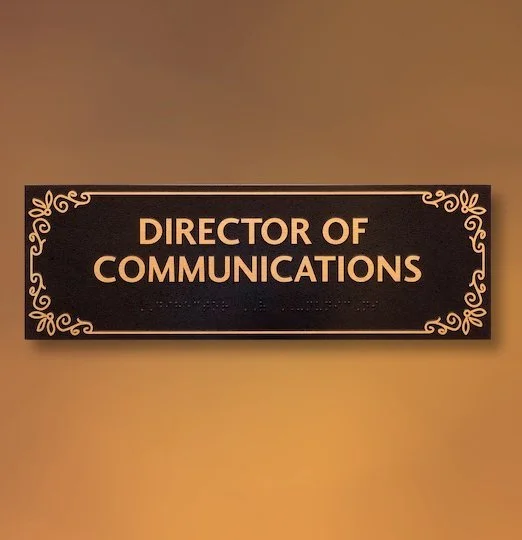
Nameplates usually mount on a wall or door and identify the person or role assigned to an office or workspace.
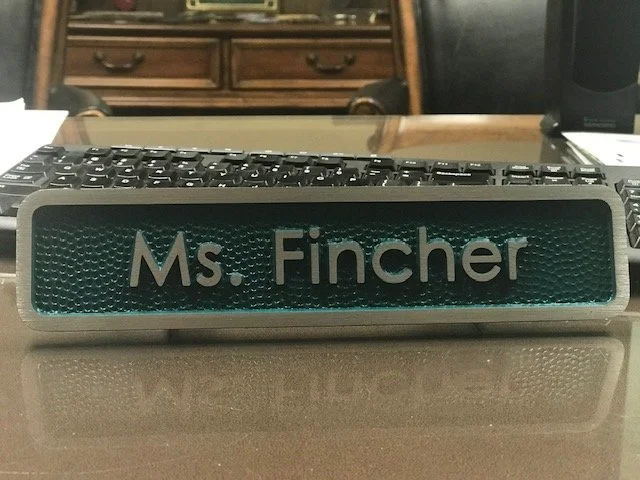
Deskplates sit on a desk or counter, often in a holder or on a base, and face visitors as they approach.
Office plaques are larger pieces that may identify a department, display a company name or recognize an achievement.
Many offices use all three together, with matching materials and fonts so everything looks like it belongs.
Choosing a Material
The material sets the tone. Here are the most common options for nameplates and deskplates:
Brass has a warm, golden shine that looks classic and professional. It is a popular choice for executive offices, law firms, banks and government buildings. Learn more about our brass plaques.
Aluminum is lightweight, durable and available in many colors and finishes, from brushed silver to bold color fills. It works well for modern offices and for large orders where consistency matters. See our aluminum plaques for ideas.
Bronze is heavier and has a rich, traditional look. It is often chosen for office plaques that recognize founders, donors or long-time leaders. Explore our bronze plaques.
Engraved, Etched or Cast
How the lettering is made affects both the look and the price. Engraved and etched nameplates have lettering cut into the surface, which gives a crisp, flat finish that works well for names and titles. Cast office plaques have raised letters and borders with real depth, which suits recognition plaques and building signage. For everyday nameplates and deskplates, engraved or etched lettering is the most common choice.
What to Include on Nameplates
Keep nameplates simple and easy to read at a glance. Most include:
The person's name
Their title or role
Credentials, if relevant, such as MD, CPA or PhD
A department or room number, if helpful for visitors
Use one font and one layout for every nameplate in the building. Consistency makes an office look organized and makes nameplates easier to read.
Sizing and Placement
Wall nameplates are usually mounted beside the door, at a height that is easy to read while standing. Deskplates should be large enough to read from a few feet away without crowding the desk. Office plaques that identify a department or company can be larger and placed in a lobby or main hallway.
Before ordering, measure the space where each piece will go and check for door frames, light switches and other obstacles.
Planning for Team Changes
Offices change. People are promoted, switch departments and move to new desks. If your team grows or changes often, consider nameplates with a slide-in insert or a holder that lets you replace just the name strip. You keep the same frame and finish while updating only the part that changes. For leadership offices and long-term roles, a permanent engraved nameplate adds a more finished look.
Signs for Shared Spaces
Not every room belongs to one person. Conference rooms, break rooms, reception areas and shared workstations benefit from clear signs, too. Use the same material and font as your personal nameplates so the whole floor feels consistent. For a reception desk, a larger plate with the company or department name helps visitors know they are in the right place the moment they walk in.
Nameplates and Deskplates as Gifts
A quality deskplate makes a thoughtful gift for a promotion, a new job, a retirement or a professional milestone. Brass and bronze deskplates with an engraved name and title are a classic choice. For a more personal touch, add the date of the achievement or a short message on the back.
Ordering Nameplates for a Whole Office
Ordering nameplates and deskplates for a full team takes a little organization. Start with a spreadsheet listing each person's name, title, credentials and location. Double-check spelling with each person before you order, and decide on one material, finish and font for everyone. A single order keeps everything consistent and is often simpler to manage than ordering pieces one at a time.
Matching Nameplates to Your Brand
Nameplates are a small but visible part of your brand. Choose a finish and color that work with your office, such as brushed aluminum in a modern space or polished brass in a traditional one. Some businesses add a small logo to deskplates and office plaques for a custom touch. If your company has brand fonts or colors, ask whether they can be matched so your nameplates feel like part of the same design as your signage, business cards and website.
Caring for Nameplates and Deskplates
Indoor nameplates need very little upkeep. Dust them regularly with a soft, dry cloth, and wipe away fingerprints with a slightly damp cloth. Avoid glass cleaners, metal polish and abrasive pads unless the maker recommends them, since these can wear away a protective coating or dull an engraved finish. For brass deskplates, a quick wipe with a microfiber cloth keeps the shine looking fresh between cleanings.
Find the Right Nameplates for Your Workplace
The right nameplates help your office look polished and make it easier for everyone to find their way. Whether you need a single deskplate for a new leader, nameplates for every door in your building or office plaques for your lobby, the Metal Memorials team can help you choose materials, finishes and layouts that fit your space. Reach out with your list and ideas, and we will help you create nameplates your team will be proud to display.